Paragraph 84 Houses (Now HO11): Building in the Cotswolds and Midlands Countryside
We help landowners and homeowners build eco-homes, extend their homes, and create unique holiday homes that gain planning permission and pay them back. RIBA Chartered Architects.
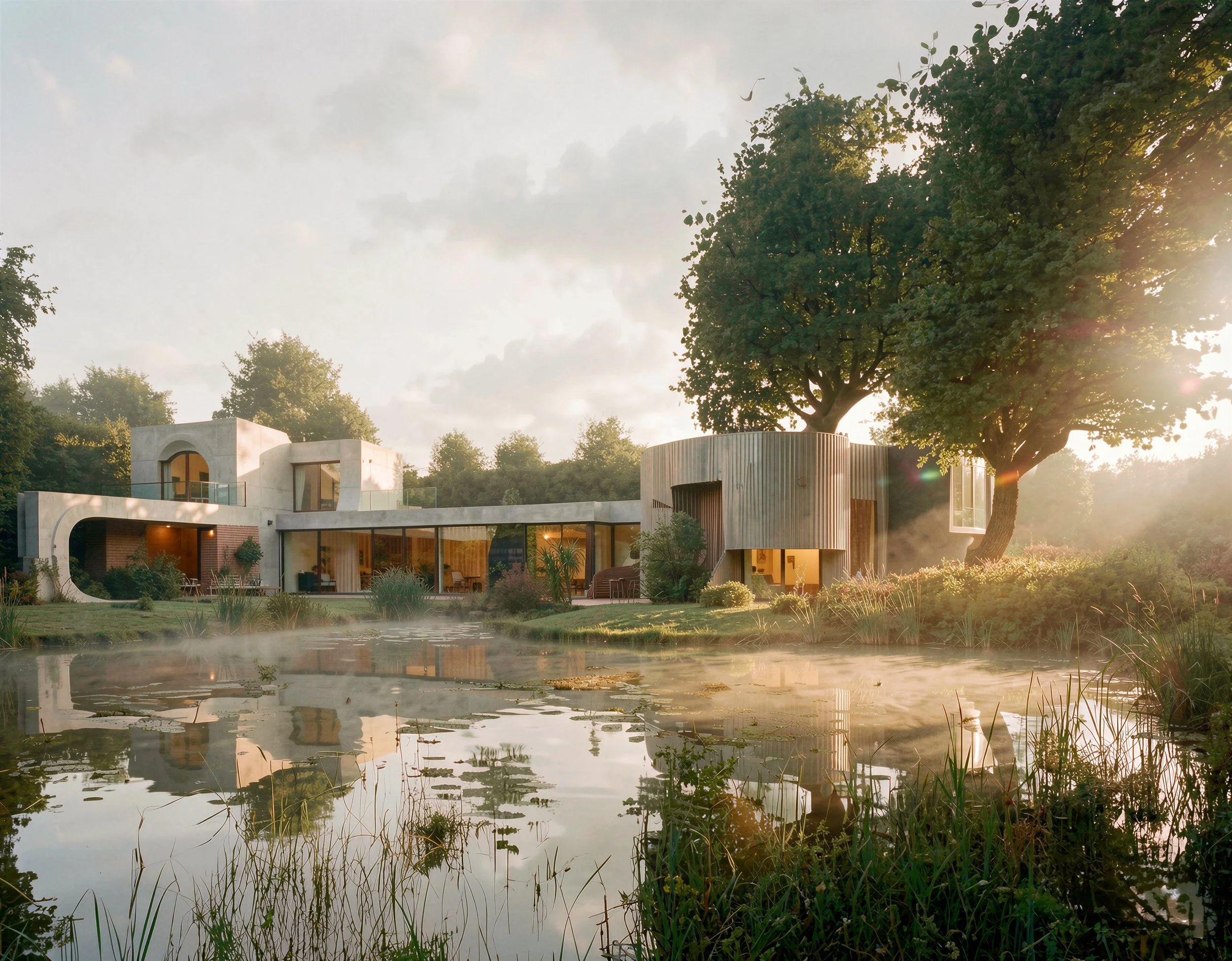
An HO11 home in the Cotswolds, currently in planning. The site and its constraints direct the form.
Introduction – Building Under Policy HO11(1)(e)
Thinking about building a home in the Cotswolds or the Midlands countryside? For most, the answer from planning authorities is a firm “no.” Paragraph 84 is the exception, and since August 2026 it has been policy HO11 of the National Planning Policy Framework (NPPF). The name changed, but the route is the same: an exceptional new home, in open countryside, where new housing would normally be refused. Another route is “very special circumstances” under policy GB6(2), which is something you may also consider.
The HO11 policy has a long history (previously paragraph 84, and before that paragraphs 80, 79, 55 and PPS7), but its aim is consistent: to allow rare, outstanding projects that can justify their place in sensitive rural settings.
For landowners, this can unlock real potential. A site with little prospect of development may, with the right design, achieve permission and add significant value. For clients, it’s a chance to create a bespoke countryside home of the highest quality, whether as a long-term residence, investment, or holiday-let opportunity.
In this article, we will look at what HO11(1)(e) is, how best to attain it and important considerations before you apply for it or purchase a site.
From paragraph 84 to HO11: what changed
The August 2026 NPPF dropped paragraph numbers and replaced them with lettered policy references. Paragraph 84 became policy HO11, and paragraph 84(e), the design route people mean when they talk about a paragraph 84 house, became HO11(1)(e). The rural worker’s dwelling route in paragraph 84(a) is now HO11(1)(a).
If you have read about paragraph 80, 79 or 55 houses, or seen it shortened to “para 84”, it is the same policy under an older number. The bar is no lower. When you read appeal decisions or council guidance, search for both labels: anything written before August 2026 cites paragraph 84, and anything after it cites HO11.
Why HO11 Matters in the Cotswolds & Midlands
Large parts of the region sit in the Cotswolds National Landscape or the West Midlands Green Belt, and the two work very differently. In a National Landscape, HO11(1)(e) is a live route. In the Green Belt it is not a route on its own: a new house is inappropriate development under policy GB6 unless it falls within one of the GB7 exceptions, so the case has to be made as very special circumstances under GB6(2). Exceptional design can carry weight in that argument, but it won't carry the argument by itself. Check which designation your land is in before anything else.
In parts of the Midlands, such as Warwickshire or Worcestershire, Green Belt land can be up to 50% cheaper than comparable areas in the home counties, making the policy especially attractive for those balancing lifestyle with investment.
That said, getting HO11 planning approval can be challenging. Councils in Gloucestershire, Warwickshire, Worcestershire and Oxfordshire expect proposals to be exceptional and not just “well-designed.” I’ve seen schemes succeed where the design integrated seamlessly with the surrounding ecology or drew directly from the forms of the local landscape. But I’ve also seen thoughtful projects rejected for reasons that felt arbitrary, often because local politics weighed more heavily than design quality. That’s why your case has to be watertight. The key thing to remember with HO11 homes is that there is no certainty of planning approval, as the decision is more subjective and subject to the opinion of the planning committee.
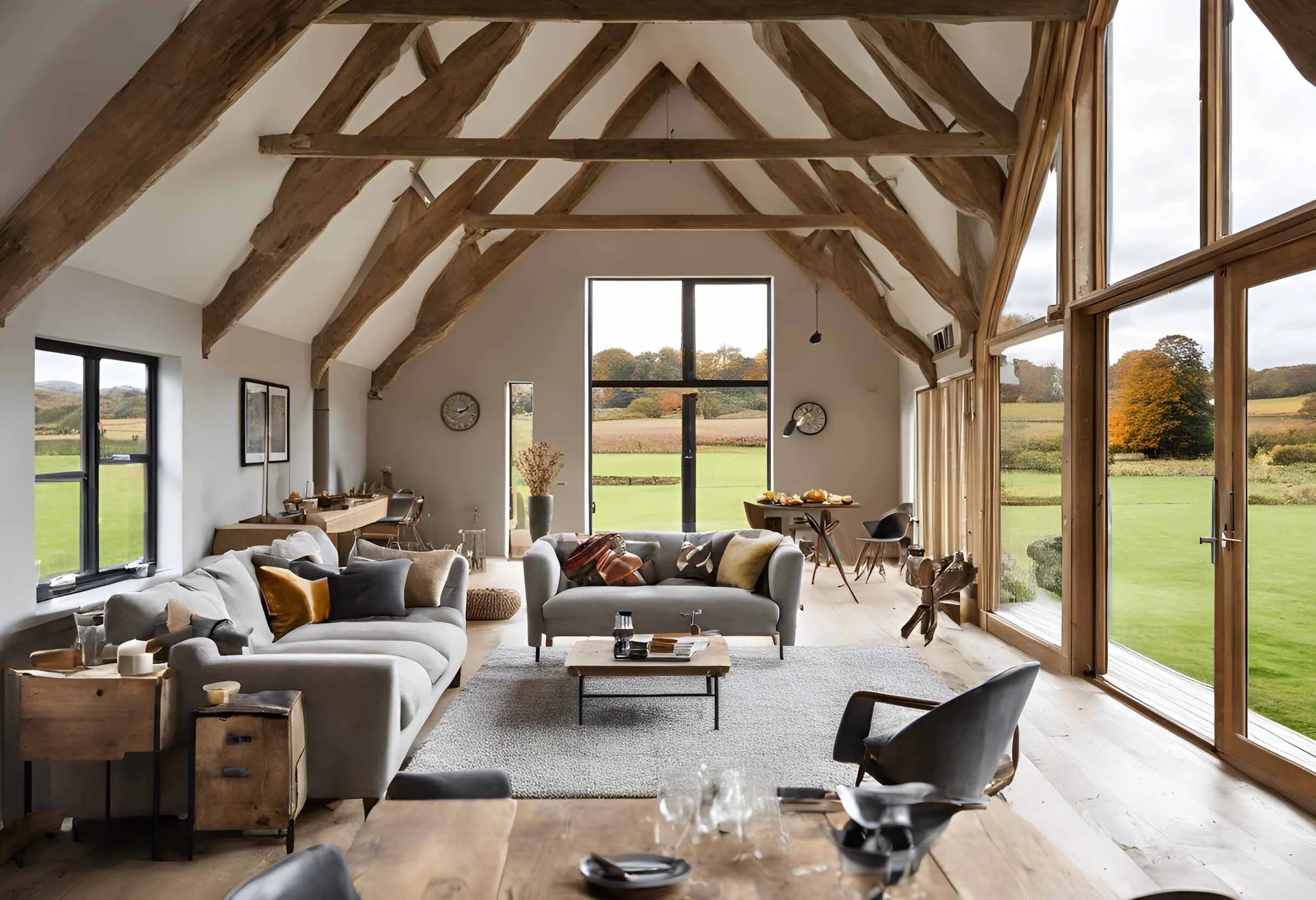
Interior of an HO11 luxury countryside home, an oak frame design with open-plan living and countryside views across the Malvern Hills.
HO11 is not the only route to rural development. My free guide sets out the routes planning actually supports, what each one earns, and what to watch for before you commit to a direction.
What Counts as an HO11 Home?
The policy wording is ambitious. HO11(1)(e) now sets two tests that must both be met. It says the design must be “of exceptional quality,” “truly outstanding,” and should “raise standards of design in rural areas.” It also has to significantly enhance its immediate setting and be sensitive to the defining characteristics of the local area. Under the old paragraph 84 this read as one rolled-up judgement; under HO11 the two limbs are joined by “and”, so a scheme that clears one but not the other should fail.
Those phrases are familiar to anyone who’s read planning policy, but they don’t explain much. What matters is how they are interpreted in practice:
Architecture that makes its case
An HO11 house can never be a standard off-the-peg dwelling. The design has to carry a clear idea and make a strong case for why it deserves to exist in a location where new housing would normally be refused. That’s part of the challenge, and the frustration. In practice, many planning committees are made up of local parish councillors with little or no background in architecture. I’ve sat through meetings where genuinely thoughtful schemes were turned down for reasons that felt arbitrary, more to do with local politics than with design quality. It’s the system we work within, but it means that your case has to be watertight and the architecture beyond question.Sustainability as a starting point
Sticking a few solar panels on the roof won’t cut it. HO11 homes are expected to lead the way in energy performance, in materials, and in how resilient they are for the long term.A response to the site
The building has to connect to its setting. In places like the Cotswolds, that might mean working with the local limestone and the grain of the escarpment. In the Midlands, it could be about woodland edges, farmland patterns, or the relationship to a historic estate.Evidence can be delivered
HO11 is not about drawings that look good in a design review. Committees expect to see that a project can be built to a very high standard, with the right consultants and the right detailing in place.
Paragraph 84 house examples
Our own HO11 house is the Cotswold Retreat, currently in planning in the Cotswolds National Landscape. The Cotswolds Design Code leans hard towards Cotswold stone and pitched roofs, so a contemporary house there has to earn its permission. The case we are making is that the vernacular was itself a response to local stone, craft and climate, and a new house can follow that logic without copying its look.
The design uses lime render on curved walls, a timber-clad cylindrical wing, locally sourced stone at the base and a sustainably grown timber frame. The site already had a mature oak and a natural pond, and the house was designed around both. That is the second HO11(1)(e) test, enhancing the immediate setting, and it is the one most schemes underweight.
It hasn’t been decided yet, and I will update this article when it is. If you want to judge the standard for yourself, look up approved and refused schemes on your own council’s planning portal and read the officer’s report alongside the drawings. The report tells you which of the two tests a scheme passed or failed, which the drawings alone won’t.
My Professional Opinion
Here is my opinion on HO11, from well over a decade’s experience:
If you're buying a site in the Green Belt, don't assume you can build a home on it. Every week I speak to someone who has bought a plot and only then found out they can't get the planning permission they need. Confirm what you can build before you buy, not after.
Some firms will tell you an HO11 home is achievable on your site when it isn't. The bar is high, and most sites don't clear it. You want an honest assessment early, not an optimistic one that costs you later.
Design quality is everything here. HO11 turns on exceptional architecture, so you need an architect whose design language is sophisticated, that you like, and that will stand up as a planning argument. The design has to be particular to the site. A scheme that could sit anywhere will fail.
If you already own a plot, HO11 is well worth exploring. It isn't the only route. Depending on the site, other routes may be worth putting on the table alongside it: very special circumstances under policy GB6(2) in the Green Belt, or a rural worker's dwelling under HO11(1)(a) where there is a genuine working need.
Raising Standards in Rural Design
An HO11 home must demonstrably raise the standards of design in the local area. We always approach this from a site-specific perspective: materials selected from the site or its immediate context, construction techniques that respond to local conditions, or a deeply integrated environmental approach that draws on natural materials. The home has to set a precedent, not just for itself, but for what good rural architecture can look like in that area.
How HO11 Decisions Are Made
Decisions for HO11 homes are usually made by the local planning committee. In some cases, a scheme may also go before a design review panel for additional scrutiny:
Planning committees are made up of elected councillors. Their role is to represent local communities, rather than being able to judge architecture. That means decisions can sometimes feel political. Objections carry weight, and councillors are wary of approving a controversial scheme. Very few committee members are trained in design, so the outcome can be inconsistent.
Design review panels are different. These involve independent architects, planners and landscape specialists who give professional feedback on whether a design genuinely meets the “exceptional quality” threshold. Their advice is not binding, but in practice, a positive review can strengthen your case considerably. In some authorities, a review is a requirement before an HO11 application is even considered. One of the advantages of this, if it happens, is that the members of a design review panel typically have a good understanding of design quality.
Delegated officer decisions. Typically, delegated decisions are used for smaller projects that are less contentious; therefore, an HO11 home is highly unlikely to be approved through this route.
In practice, HO11 decisions are inconsistent. The same design might be approved in one district and refused in the next. Cotswold District and Stratford-on-Avon tend to be more open to ambitious schemes, while authorities around the West Midlands Green Belt are far stricter. Even between neighbouring counties, the interpretation varies. This is why strategy matters: success depends on a clear planning case, early engagement with officers, and a design strong enough to stand up to both professional and political scrutiny.
Are HO11 homes expensive?
The short answer is yes, they are more expensive than a conventional house, and don’t let anyone tell you otherwise. The requirement for design quality, sustainability and consultant input inevitably pushes costs up.
That said, there are effective ways to control costs. One mistake I see time and again, and it’s almost a cliché on Grand Designs, is clients pushing for HO11 homes that are far larger than they need. They end up as vanity projects. Bigger is not necessarily better. A well-planned 157m² home can meet a family’s needs just as well as a 210m² one, sometimes better, depending on the spatial arrangement internally, but at a far lower cost.
At around £3,900 per square metre, the larger scheme might total £819,000, compared with £612,000 for the smaller, a saving of more than £200,000 simply by being critical about the space that’s genuinely required. It is also worth considering natural materials when undertaking such a project, as natural materials last far longer, extending the lifespan and beauty of the home.
What Is the Likelihood of HO11 Approval?
Approval rates vary widely between local authorities, and there is no reliable national figure. Schemes that have been through an independent design review panel go to committee in a much stronger position.
What makes the difference is usually preparation. Projects that succeed are the ones that:
Engage early with the local authority.
Take the scheme to an independent design review panel for professional scrutiny.
Assemble the right consultant team to cover landscape, ecology, heritage and sustainability.
HO11 approval can potentially add £100,000s to the value of your land.
If you have a plot of land in a rural area without planning permission, it will not necessarily be worth that much. Successfully attaining planning permission, particularly for a home, the value of the land will increase overnight quite significantly.
Professional Fees for HO11 Homes
HO11 is not cheap from a professional fee perspective. To stand a chance, you need the right consultants: landscape, ecology, planning, sustainability, and often input from a Design Review Panel. On top of that, surveys on things like trees, highways, and heritage are all required before you even get near a decision. This is why pre-construction costs usually sit somewhere between £30,000 and £100,000.
The way I deal with this is by breaking the process into stages. We test ideas early, check the policy constraints, and only push forward when it still makes sense. Each stage is a chance to pause and ask: Is this viable? It’s our way of de-risking the project for our clients.
It doesn’t remove the risk completely – nothing can under HO11, but it does give clients more control and stops projects turning into blind leaps of faith.
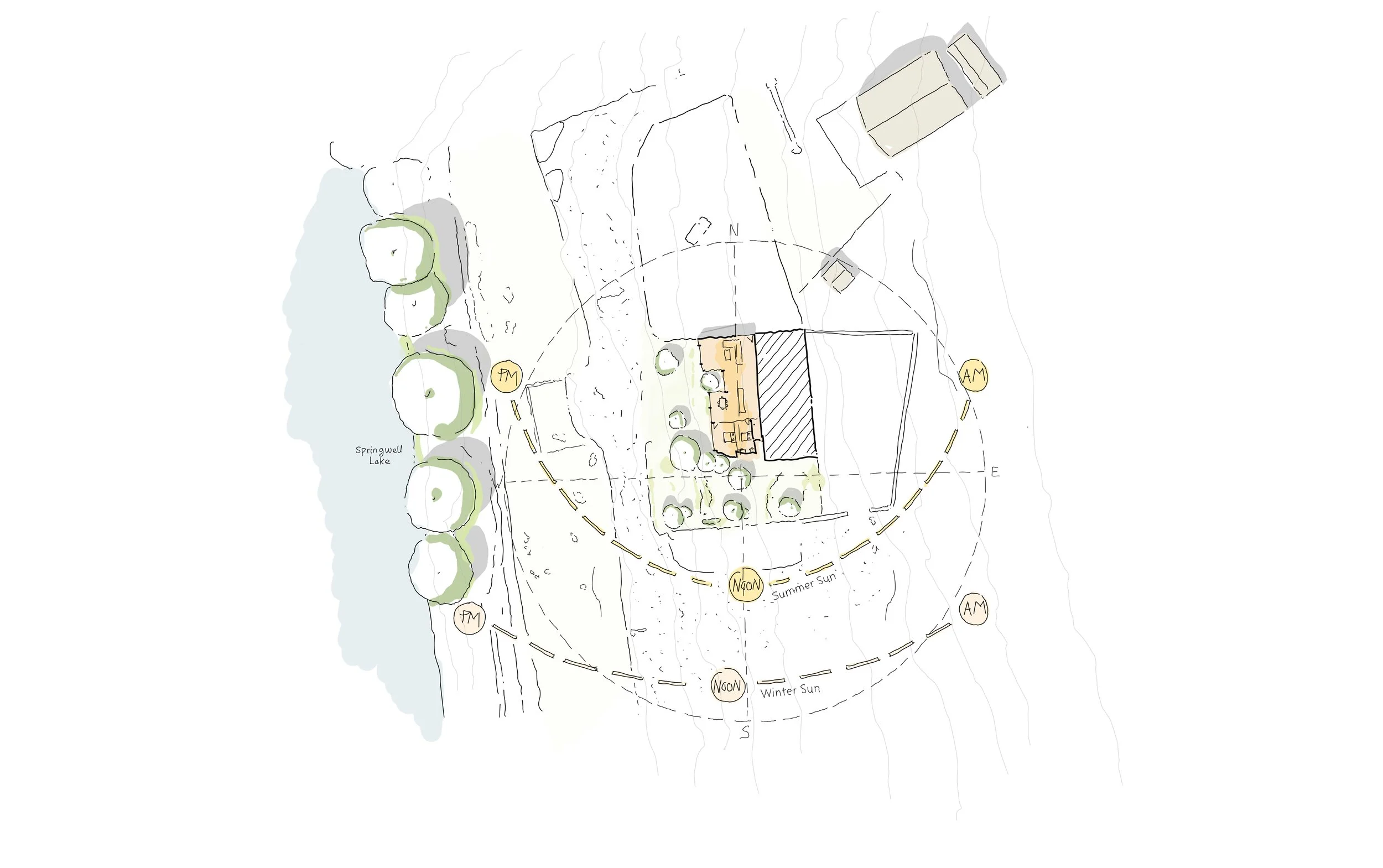
Concept design for an ongoing HO11 countryside home — site plan showing orientation, sun path and integration with the rural landscape.
Choosing a paragraph 84 architect
Most architects can design a good house. Far fewer have taken one through a paragraph 84 or HO11 application, and the planning case matters as much as the drawings. Before you appoint anyone, ask them:
Have you taken a paragraph 84 or HO11 scheme through pre-application, design review or committee? What happened?
Will you tell me if my site can’t meet the test? An architect who says yes to every site is selling fees, not advice.
Who will be on the consultant team for landscape, ecology, planning and sustainability, and who leads it?
How are the fees staged, and where are the points where we can stop if the case isn’t working?
What would you design for this site in particular? A house that could sit anywhere will fail.
This is what our Pre-Design Report is for. It tests your site against HO11 before you commit to a full design: the planning route, the risks, the consultants you will need and a realistic cost. If the site doesn’t stack up, you find out before spending £30,000 to £100,000 on pre-construction costs, not after.
Final Thoughts
HO11 is one of the most challenging routes in UK planning, but also one of the most rewarding. When handled properly, it can unlock land value and deliver a truly exceptional countryside home.
If you’re considering a project in the Cotswolds or Midlands and want to explore whether HO11 could work for your site, get in touch by booking a free 20-minute call with me. I’m happy to review your options and give you a realistic picture of the process.